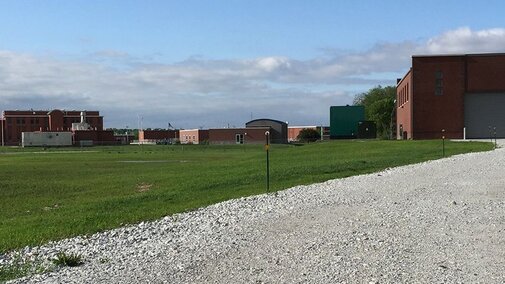
The innovative Centralized Renewable Energy System (CRES) leverages its proximity to the Theresa Street Wastewater Treatment Plant to provide year-round heating and cooling for the Nebraska Innovation Campus (NIC) without traditional steam boilers and water chillers. Instead, the CRES plant sustainably warms and cools buildings by exchanging thermal energy (BTUs) from treated wastewater.
"This central renewable energy system serving Nebraska Innovation Campus is one of only a few such systems in the world. We are demonstrating our commitment to innovation as well as to the environment."
-Dan Duncan, Innovation Campus Executive Director
Cited Article
General Statistics
Staffing: Fully Automated - Remote Operations, Shared Maintenance Staff
Campus Heating & Cooling Distribution System: 3.25 Miles
TSWTP Effluent Water Loop: 0.77 Miles
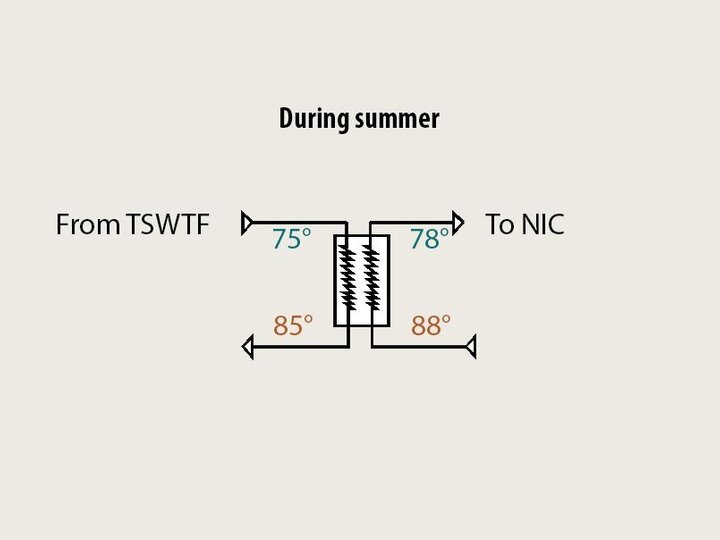
Comfort cooling temperature: 75°-78°F
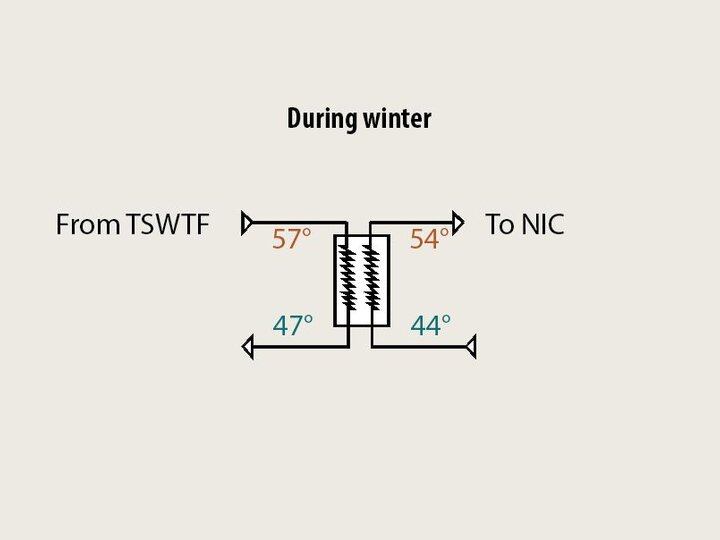
Heating temperature: 54°-57°F
Equipment and Fuel Profile
Equipment "trains" comprised of: 1 plate-and-frame heat exchanger, 1 pump @ 3900 gallons/minute, 2 filters
Equipment "trains" available: 6
Equipment "trains" buildout capacity: 2 with 1 spare
Amount of heating and cooling per heat exchanger: 1630 tons
TSWTP Pump Station submersible pumps: 2 with 1 spare @ 5,000 gallons/minute
How CRES works
Completed in late summer of 2014, the CRES is made up of three main components: the Theresa Street Wastewater Treatment Facility (TSWTF) Pumping Station, the Heat Exchanger Pump Facility, and the campus distribution system.
The TSWTF Pumping Station is located by the effluent (wastewater) discharge outlet near the Salt Creek. There, multiple pumps partially divert treated effluent to the Heat Exchanger Pump Facility within a self-contained water loop. Once the BTU energy has been exchanged with the campus loop, the effluent is then returned to the same flow path it originated from at the TSWTF. The flow through the CRES system is modulated for maximum efficiency based on the thermal needs of Innovation Campus.
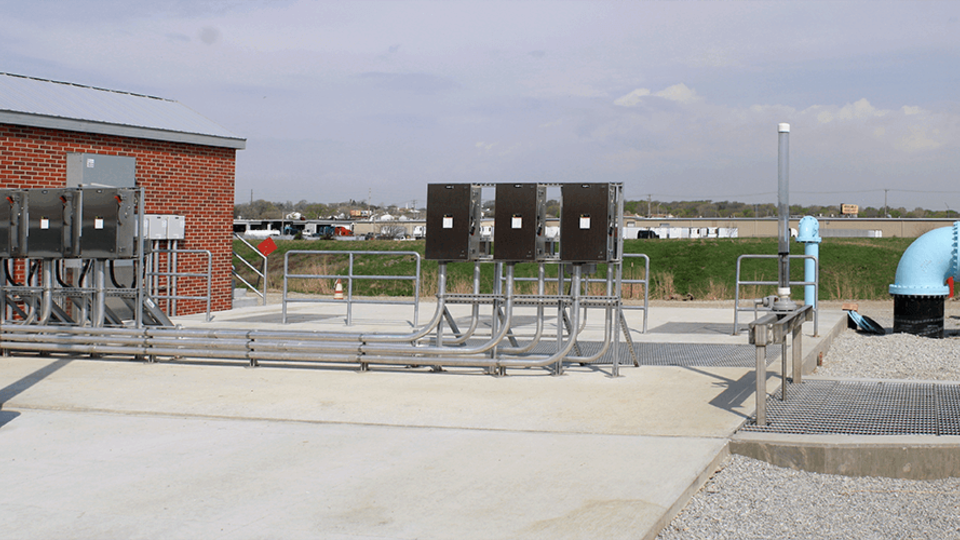
Heat Exchanger Pump Facility
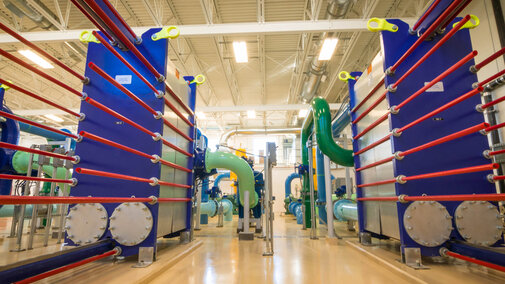
The Heat Exchanger Pump Facility is located on the edge of NIC’s northeast exit and houses three large plate and frame heat exchanger systems and a number of pumps. These heat exchangers provide a heat transfer medium for the TSWTF Pump Station water loop and the campus water loop.
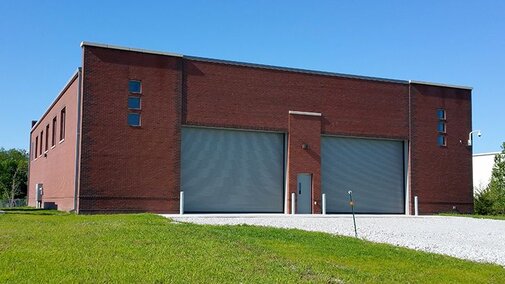
Once the water loops have undergone their heat transfer process, the effluent water loop is then discharged back to the Salt Creek.
The campus water loop is circulated through the campus distribution system, flowing to campus buildings, offices, and lab spaces for heating and cooling.
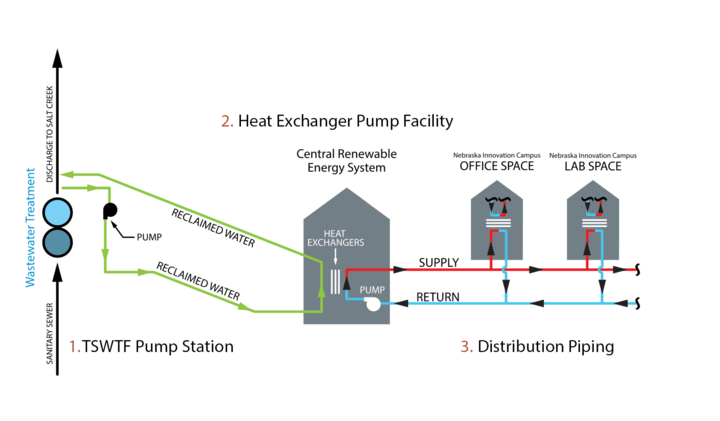
CRES Heating and Cooling Process
The Centralized Renewable Energy System allows for campus heating and cooling with minimal carbon footprint, making it a very efficient, environment-friendly system. The diagrams below illustrate season-specific temperature changes in each water loop as the flow passes through the heat exchanger system.
Summer Temperature Changes
Winter Temperature Changes
Operations
One of the dynamic features of the CRES facility is that it can be operated 24/7 without staff on-site. The complex equipment is completely automated and linked to the City Campus Utility Plant (CCUP), where Utility Plant operators remotely monitor and operate equipment.
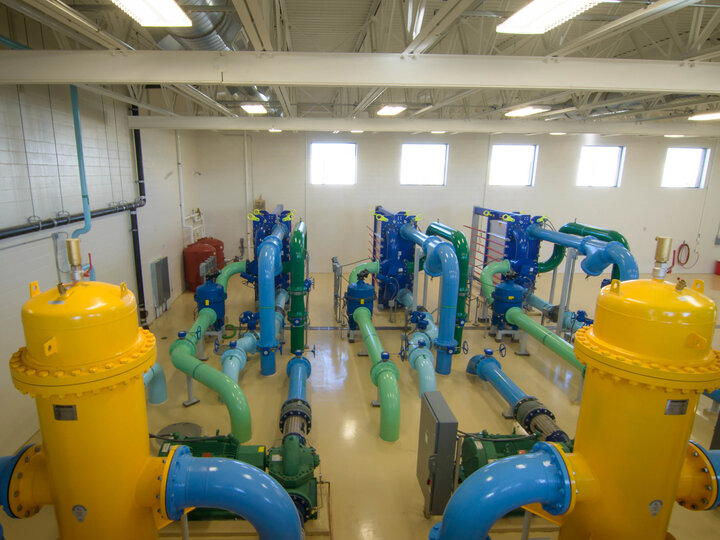
The Heat Exchanger Pump Facility currently utilizes three of six available spaces, or 'trains,' for the heat exchangers. As Innovation Campus grows or the usage changes, additional heat exchangers can be added to accommodate future heating and cooling needs. The facility also houses a water chemistry lab space, a remote operations control room, a maintenance area, and an electrical equipment room. The entire facility is backed up with an emergency power generator to ensure resiliency.
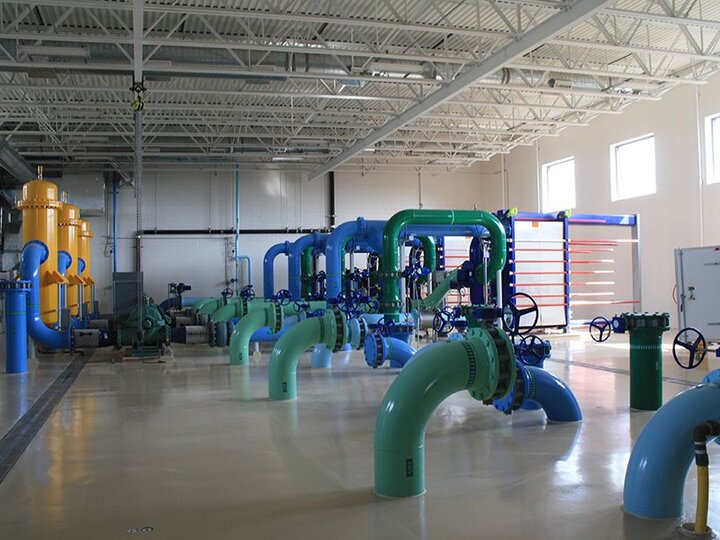
CRES Heat Exchanger Facility
Colors
Pumps & different color-coded pipings that signify different water loops
What is a Plate-and-Frame Heat Exchanger?
Plate and frame heat exchanger systems are constructed with thin, textured sheets of metal and gaskets that are sandwiched alternately and held together by thick metal frames on both ends. The texture of the metal sheets maximizes the heat transfer surface (a much larger surface area than with conventional heat exchangers) and guides water flow. The heat transfer process occurs when water from each water loop flows from top to bottom on opposite sides of each metal sheet.
History
CRES is a product of many exploratory discussions about sustainable alternatives to traditional boilers and chillers during the planning phase of Innovation Campus. The main requirement of alternatives was that they must be capable of providing year-long heating and cooling to the 2.2 million square foot campus. Studies were carried out to identify possible options.
In these studies, engineers noted the close proximity of the Theresa Street Wastewater Treatment Facility (TSWTF) to Innovation Campus and the relatively stable and moderate temperatures of the effluent from the facility into the Salt Creek during all seasons. The reclaimed water fluctuates between 57° Fahrenheit in winter and 75° Fahrenheit in summer.
Engineers then formulated a unique system - much like a geothermal system but using the wastewater as a heat sink rather than the Earth - to leverage those advantages. Construction began in fall 2013 and was completed in 10 months.